Severe weather can happen quickly, and a single storm can leave homeowners dealing with damaged roofs, broken windows, siding damage, fallen trees, or water intrusion. For homeowners in Dell Rapids, SD, knowing what to do after a storm can make the insurance claims process much easier.
If your home has been damaged by hail, high winds, or another covered storm event, your first priority should be keeping your family safe and preventing additional damage. After that, documenting the damage and contacting your insurance company promptly can help get the claims process started.
Understanding how homeowners insurance works after storm damage can also help you know what to expect.
What Types of Storm Damage Can Home Insurance Cover?
The exact coverage depends on your policy, but homeowners insurance can generally provide protection for certain covered causes of loss.
In South Dakota, common homeowners policies can provide coverage for risks such as windstorm and hail, although the specific policy form, exclusions, deductibles, and limits matter.
Storm-related damage may include:
-
Hail damage to your roof
-
Wind damage to roofing or siding
-
Broken windows
-
Damage from falling trees
-
Certain interior water damage resulting from a covered event
-
Damage to detached structures
-
Damage to covered personal belongings
Not every type of storm-related damage is automatically covered, so reviewing your individual policy is important.
Inspect Your Home After a Storm
Some storm damage is obvious, while other damage can be difficult to see from the ground.
After a severe storm, look for signs such as:
-
Missing or damaged shingles
-
Dented gutters
-
Damaged siding
-
Broken windows
-
Fallen branches
-
Water stains on ceilings or walls
-
Damaged fences
-
Damage to sheds or detached garages
Roof damage can be especially difficult to identify without a professional inspection. Even if your roof appears fine from the ground, hail or wind may have caused damage that isn’t immediately noticeable.
Document the Damage Before Making Repairs
One of the most important steps after storm damage is documenting what happened.
Take photos and videos of:
-
The exterior of your home
-
Your roof, if it can be safely photographed
-
Damaged siding
-
Windows and doors
-
Interior water damage
-
Damaged furniture or belongings
-
Detached structures
-
Fallen trees or debris
The South Dakota Division of Insurance recommends taking photographs or videos of damage before making temporary repairs whenever possible.
Keep copies of photographs, receipts, estimates, and correspondence related to the claim.
Contact Your Insurance Company Promptly
Once you’ve documented the damage and taken reasonable steps to protect your property, contact your insurance company or insurance agent.
Don’t wait unnecessarily to report a potential claim. South Dakota’s Division of Insurance advises homeowners to contact their insurer as soon as possible because policies may have specific requirements for reporting losses.
When reporting the claim, be prepared to provide:
-
Your policy information
-
The date of the storm
-
A description of what happened
-
Photos and videos of the damage
-
Information about temporary repairs
-
Receipts for related expenses
Keeping organized records can make the process easier.
Make Temporary Repairs to Prevent Further Damage
After a storm, you may need to make temporary repairs to keep the damage from getting worse.
For example, you may need to:
-
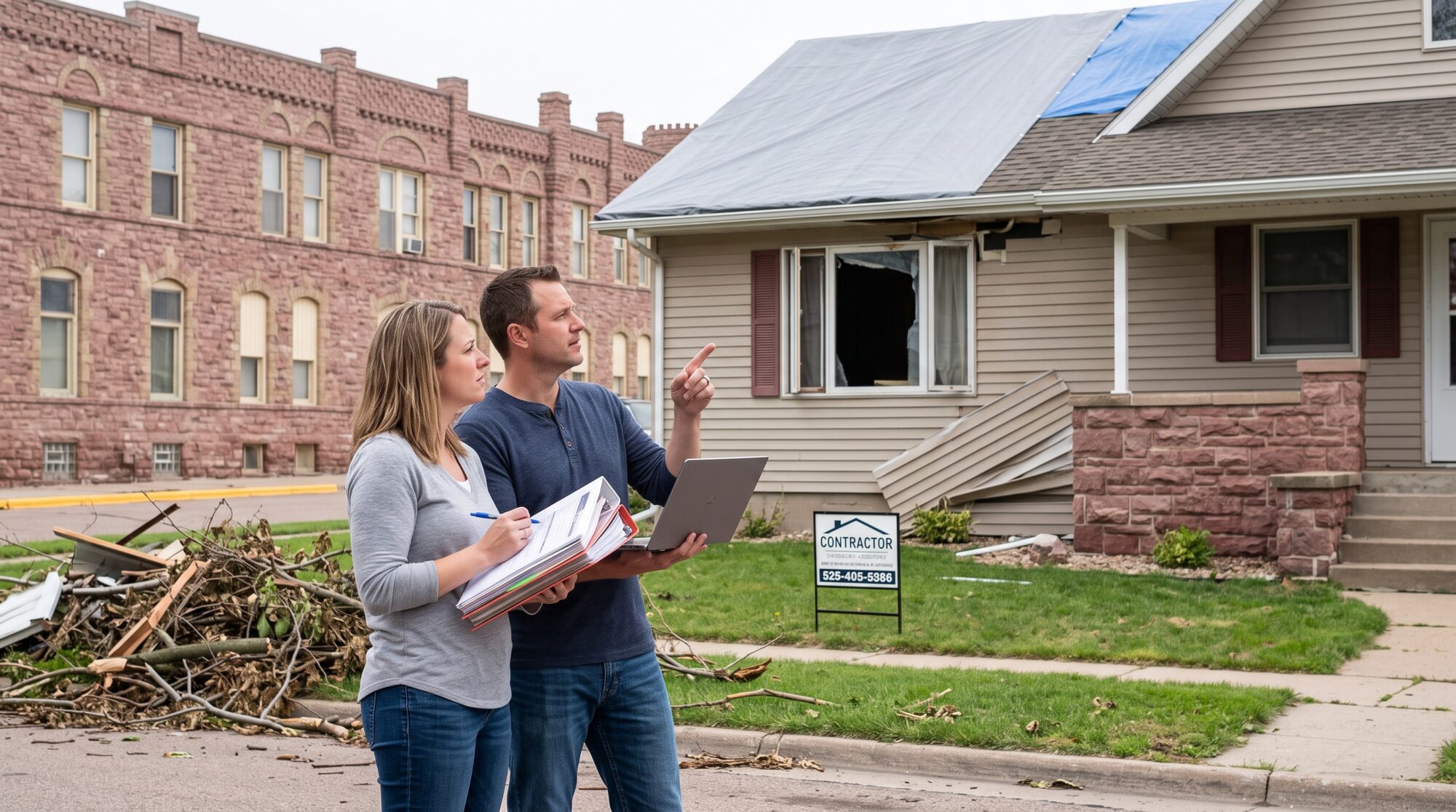
Cover a damaged roof with a tarp
-
Board up a broken window
-
Remove water from inside the home
-
Protect belongings from additional water damage
The South Dakota Division of Insurance recommends making temporary repairs when necessary to protect the property and keeping receipts for those expenses.
However, avoid making permanent repairs before your insurance company has had an opportunity to inspect the damage when possible. The state specifically advises homeowners not to make permanent repairs before contacting the insurer because doing so can make it more difficult to evaluate the claim.
Understand Your Hail and Wind Deductible
One important detail to check after storm damage is your deductible.
Your homeowners policy may have a specific deductible that applies to certain types of storm damage. The amount you pay before insurance coverage applies can affect the final amount you receive for a covered claim.
South Dakota’s Division of Insurance specifically provides guidance on hail damage and recommends understanding the terms of your policy before and during the claims process.
If you’re unsure which deductible applies to your storm damage, ask your insurance agent or claims representative to explain it.
Be Careful When Hiring Storm Repair Contractors
After a major storm, contractors may begin contacting homeowners offering roof inspections or immediate repairs.
Don’t feel pressured to hire the first contractor who approaches you.
Before signing a contract, consider:
-
Getting multiple estimates
-
Asking for proof of insurance
-
Checking references
-
Reviewing the written contract carefully
-
Avoiding large upfront payments
-
Asking questions about warranties
-
Checking whether the contractor is properly licensed when applicable
South Dakota’s Division of Insurance advises homeowners to be cautious with contractors after a disaster and to ask for proof that contractors are licensed, bonded, and insured.
Your insurance company or agent may also be able to provide guidance about the claims and repair process.
What If You Can’t Live in Your Home?
Severe storm damage can sometimes make a home temporarily uninhabitable.
Depending on your policy, Additional Living Expense Coverage may help pay certain additional costs while your home is being repaired after a covered loss.
This could potentially include expenses such as temporary housing and other necessary increases in living costs, subject to your policy’s limits and conditions. South Dakota’s Division of Insurance notes that homeowners may have additional living expense coverage after an insured loss.
If you need to leave your home, keep receipts and ask your insurance company what expenses may qualify under your policy.
Continue Learning About Your Insurance
Storm damage is just one situation where understanding your homeowners insurance can make a difference. Knowing what your policy covers, what your deductibles are, and how the claims process works can help you feel more prepared when unexpected problems occur.
Continue reading one of our other insurance guides to learn more about homeowners insurance, coverage options, and ways to protect your home and finances.
Review Your Home Insurance Before the Next Storm
You don’t have to wait until after a storm to review your insurance.
An annual home insurance review can help you determine whether your coverage still reflects your home and belongings.
Consider reviewing your policy if you:
-
Replaced your roof
-
Completed renovations
-
Added a garage or shed
-
Purchased expensive belongings
-
Increased the value of your personal property
-
Made major improvements to your home
-
Haven’t reviewed your coverage in several years
Making sure your coverage is up to date can help you be better prepared for future losses.
Work With an Independent Insurance Agency
Understanding your homeowners insurance can be difficult, particularly when you’re dealing with storm damage and trying to figure out what your policy covers.
An independent insurance agency can help you review your home insurance in Dell Rapids, SD, compare coverage options from multiple insurance carriers, and answer questions about deductibles, limits, and available coverage.
Having an insurance professional you can turn to before a storm occurs can also make it easier to understand your policy when you actually need to use it.
Final Thoughts
Storm damage can be stressful, but knowing what to do afterward can help make the insurance process more manageable.
If your home in Dell Rapids, SD is damaged by hail, wind, or another covered storm event, document the damage, take reasonable steps to prevent additional damage, contact your insurance company promptly, and keep records of repairs and expenses.
Most importantly, don’t wait until after a major storm to find out what your policy covers. Reviewing your homeowners insurance ahead of time can help you understand your coverage, deductibles, and potential exclusions before you need to file a claim.
If you’re ready to review your current coverage, get a homeowners insurance quote to compare options and make sure your Dell Rapids home has the protection you need.